
eBay Unveils Climate Transition Plan with SBTi-Backed Net-Zero Target
eBay, the global e-commerce marketplace connecting millions of buyers and sellers across more than 190 markets, has released its inaugural Climate Transition Plan with a Science Based Targets initiative (SBTi)-validated commitment to reach net-zero emissions by 2045. The plan represents a comprehensive roadmap to eliminate greenhouse gas emissions across the company's entire value chain, aligning eBay's climate ambitions with the Paris Agreement's 1.5°C temperature pathway. This marks a significant milestone for the digital commerce sector, where logistics and transportation emissions have historically presented complex decarbonization challenges for platform-based businesses that don't own delivery fleets but facilitate billions of transactions annually.

Ambitious Targets with Early Progress
eBay's SBTi-validated climate targets establish clear milestones across all emission scopes, with the company committing to a 90% reduction in total emissions across its value chain by 2045 compared to 2019 baseline levels. The near-term and long-term goals demonstrate both aggressive timelines and measurable progress already underway:
- 90% reduction in Scope 1 and 2 emissions by 2030, with eBay already achieving a 92% reduction as of 2024: surpassing the target eight years ahead of schedule
- 27.5% reduction in Scope 3 emissions from downstream transportation and distribution by 2030, with 21% already achieved toward this goal
- 100% renewable electricity maintained across operations, a milestone reached in 2024, one year ahead of the original 2025 target
- 90% absolute reduction across the entire value chain by 2045, with remaining emissions neutralized through permanent carbon removal methods
The company's operational emissions performance has significantly outpaced its initial projections, suggesting that eBay's internal energy efficiency initiatives and data center optimization strategies have delivered results faster than anticipated. This early success with Scope 1 and 2 emissions provides a strong foundation, though the company faces considerably steeper challenges with Scope 3 transportation emissions that represent the bulk of its carbon footprint.

Tackling the Logistics Challenge Head-On
Scope 3 emissions from downstream transportation and distribution account for approximately 84% of eBay's total carbon footprint, making logistics partnerships the linchpin of the company's decarbonization strategy. Since eBay operates as a marketplace platform rather than owning delivery fleets, achieving the 27.5% reduction by 2030 requires deep collaboration with major shipping carriers including DHL, UPS, and FedEx: many of which have established their own fleet electrification and net-zero commitments. The Climate Transition Plan breaks down the pathway to net-zero into five strategic pillars, each targeting specific portions of the company's emissions profile.
Carrier collaboration represents the largest lever, targeting 46% of total emissions reduction through partnerships with logistics providers. eBay is working with carriers to prioritize ground shipping over air freight where feasible, support the transition to electric vehicle fleets, and implement route optimization technologies that reduce fuel consumption. This collaborative approach recognizes that systemic change in logistics requires coordination across the entire shipping ecosystem rather than unilateral mandates that might push emissions challenges elsewhere in the supply chain.

Industry collaboration aims to deliver 22% of decarbonization through broader partnerships with shipping companies, industry associations, and NGOs focused on developing low-carbon logistics solutions. These initiatives include advocating for policy frameworks that accelerate commercial EV adoption, supporting infrastructure development for charging and alternative fuels, and participating in industry-wide standards for emissions measurement and reporting. Operational efficiency improvements target 15% of emissions reduction through continued renewable energy procurement, energy-efficient data center operations, and optimization of eBay's owned and leased facilities.
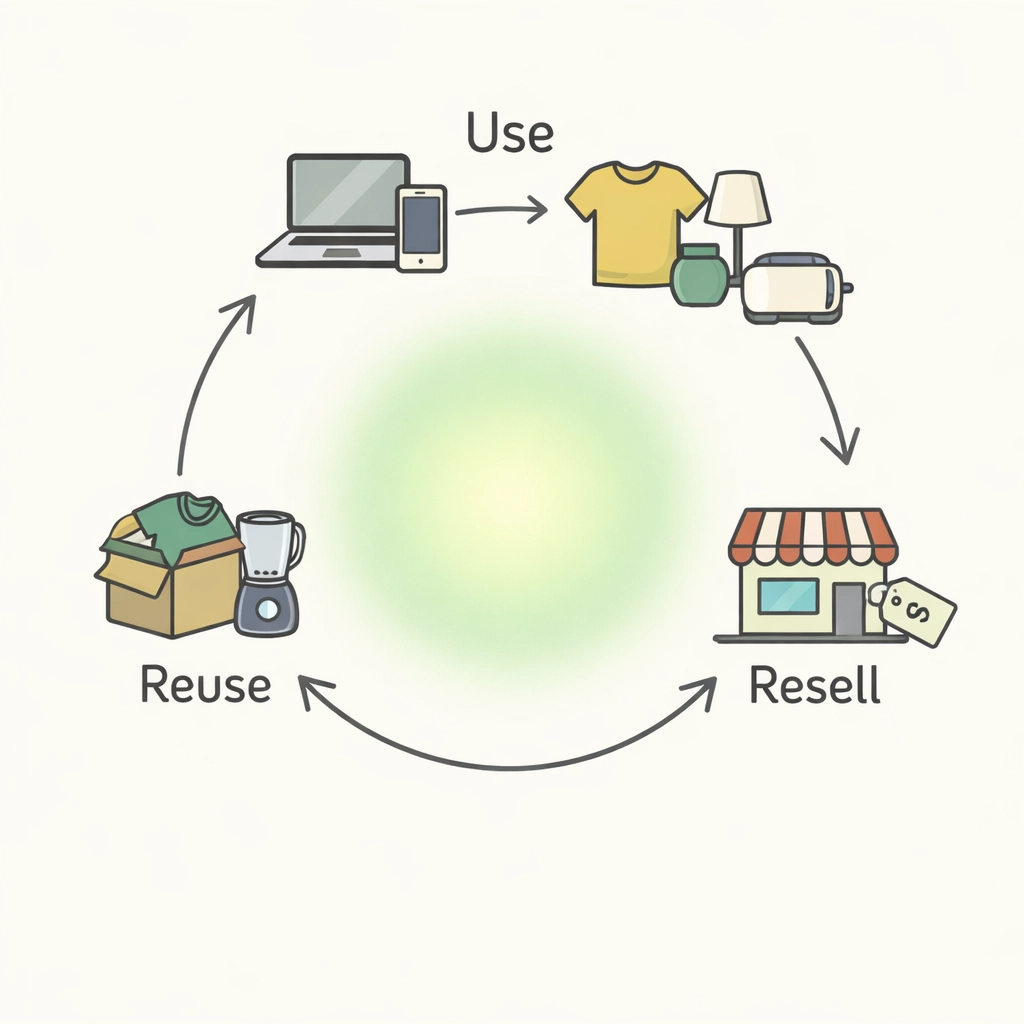
The company's sustainable commerce initiatives leverage eBay's core business model as a circular marketplace, promoting product reuse and extending product lifecycles to avoid manufacturing emissions associated with new production. By facilitating the resale of electronics, fashion, collectibles, and other goods, eBay estimates it helps buyers avoid significant upstream emissions while keeping functional items out of landfills. Finally, carbon removal strategies will neutralize the remaining 17% of unabated emissions using permanent and durable carbon dioxide removal methods, though specific technologies and suppliers have not yet been disclosed.
Governance, Strategy, and the Long Game
According to Renee Morin, eBay's Chief Sustainability Officer, developing the net-zero target required "a lot of time and internal strategy and relationship building" across multiple years of planning and stakeholder engagement. The Climate Transition Plan integrates climate considerations into eBay's governance structures with Board-level oversight, embeds climate risk into the company's enterprise risk management framework, and connects decarbonization initiatives to financial planning processes. This governance integration signals that eBay's leadership views climate action as a strategic business priority rather than a standalone corporate social responsibility program.
The 2045 timeline positions eBay five years ahead of the commonly cited 2050 net-zero target adopted by many corporations, reflecting both ambition and pragmatism about the pace of technological change in logistics and energy systems. While near-term progress on operational emissions has exceeded expectations, the heavier lift on Scope 3 transportation emissions will test eBay's ability to influence change across a fragmented and complex global shipping industry. The company's success will largely depend on whether major carriers follow through on their own electrification commitments and whether sustainable aviation fuels and other low-carbon transportation technologies scale rapidly enough to meet 2030 milestones.
For platform businesses across e-commerce, food delivery, and ride-sharing sectors, eBay's Climate Transition Plan offers a potential template for addressing value chain emissions when direct operational control is limited. The emphasis on carrier partnerships, industry collaboration, and circular business models reflects the reality that marketplace platforms must orchestrate decarbonization across ecosystems rather than implementing top-down solutions within their own four walls.
To read more about eBay's inaugural Climate Transition Plan and net-zero strategy, check out the official announcement from eBay Inc or the detailed coverage at ESG Dive.
