
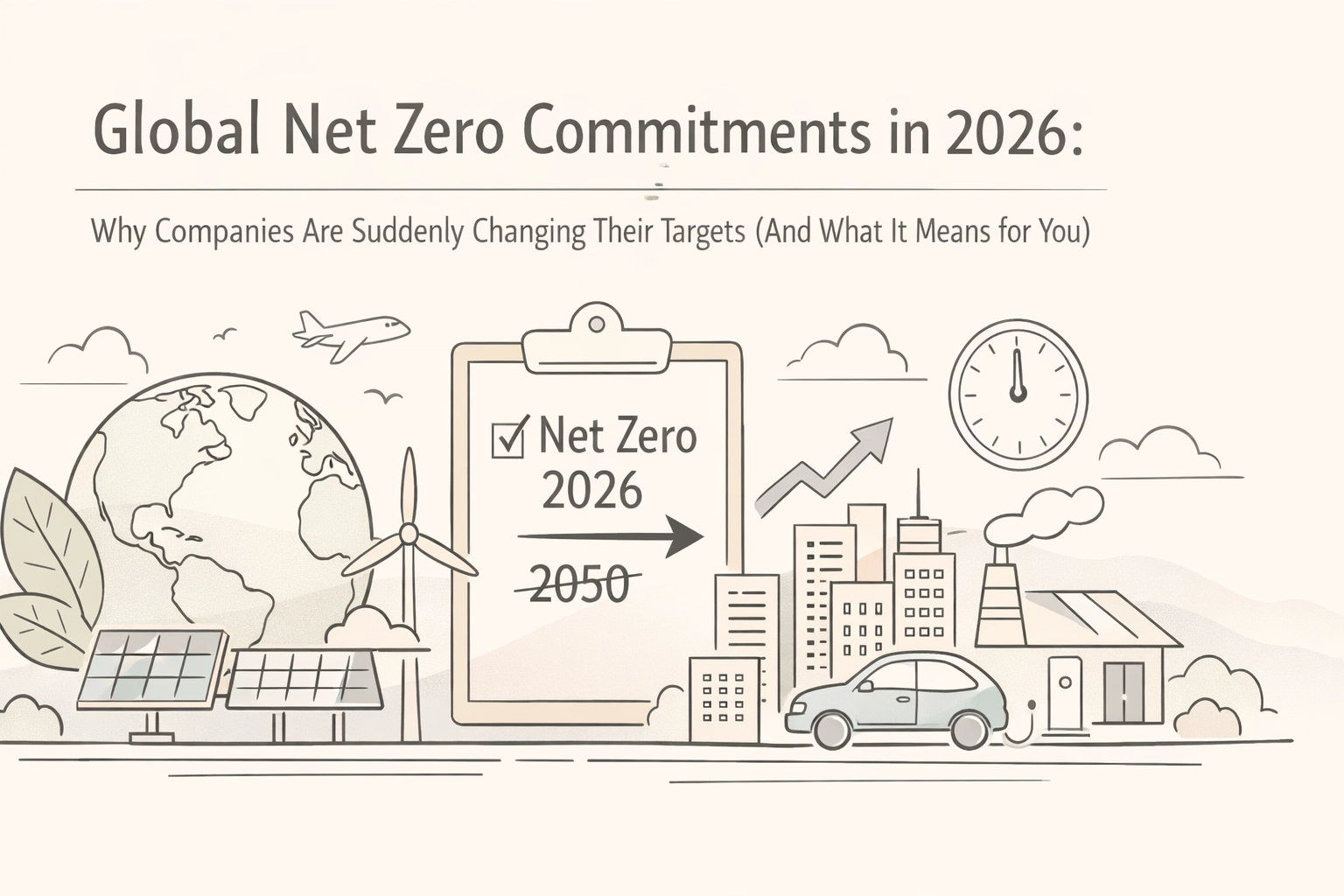
Something unexpected happened in 2025 and early 2026: after corporate net-zero commitments plateaued and even retreated in 2024, companies suddenly started setting ambitious climate targets again. And we're not talking about a modest uptick: we're talking about a dramatic surge that caught even climate policy experts off guard.
According to recent data, 41% of the world's largest 2,000 companies now have value-chain net-zero targets, up from just 27% in 2024. That's a jump of more than 50% in commitment rates in roughly two years. Even more surprising? This acceleration happened during a period of intense political backlash against corporate climate action, including high-profile companies publicly backing away from their ESG commitments and a second U.S. withdrawal from the Paris Agreement.
So what's really going on here? Are companies doubling down on climate action, or is this just more greenwashing with better PR? Let's dig into the data.
The Plateau That Wasn't Supposed to End
To understand why 2026 feels different, you need to know what happened in 2024. After years of steady growth in corporate net-zero commitments, the momentum suddenly stopped. Companies were hesitant. Some were quietly walking back their climate pledges. Others were staying silent, waiting to see which way the political winds would blow.
Growth in net-zero commitments stalled at 37% in 2024, and many analysts predicted the corporate climate movement had peaked. The narrative was that companies had realized these targets were too expensive, too complicated, or too politically risky to maintain.

But then 2025 happened, and companies started committing again: not tentatively, but decisively. By early 2026, we're seeing commitment rates that exceed pre-2024 levels. The question everyone's asking is simple: why?
The answer appears to be a fundamental shift in how companies view decarbonization. Rather than treating net-zero targets as compliance exercises or reputation management, leading companies increasingly see decarbonization as core business strategy. They're not setting targets because they have to: they're setting them because they believe it makes financial sense.
What Companies Are Actually Doing
Here's where it gets interesting: companies aren't just announcing targets anymore. They're implementing them with far more rigor than we've seen before.
The world's largest companies adopted an average of 13 out of 21 possible decarbonization strategies in 2025, compared to 11.5 strategies in 2024. That might not sound dramatic, but it represents a significant acceleration in actual climate action, not just climate pledges.
The most popular strategies include energy efficiency improvements (adopted by 87% of companies with climate commitments), waste reduction programs (87%), and renewable energy procurement (81%). These aren't moonshot technologies or experimental approaches: they're proven methods that often deliver cost savings alongside emissions reductions.
More significantly, 73% of companies now have Scope 1 and 2 net-zero targets covering their direct operations, up from 65% the previous year. Scope 1 and 2 emissions are the "easier" targets: they're the emissions companies directly control from their own facilities and purchased electricity. The harder challenge is Scope 3, which includes emissions from suppliers, distribution, and product use.
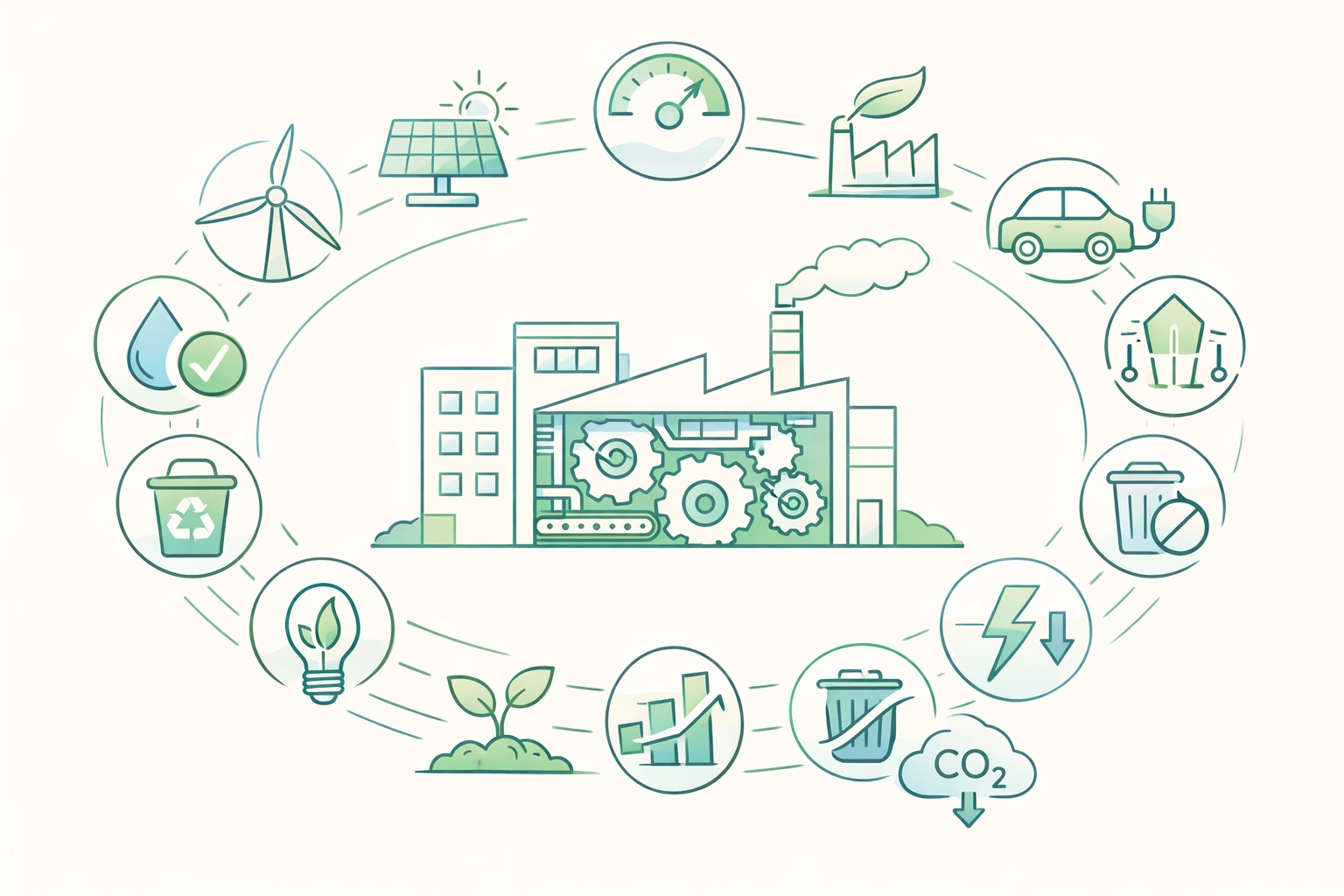
On the Scope 3 front, we're seeing progress too, though it's slower. The 41% figure for value-chain net-zero targets represents companies committing to address their entire carbon footprint, including those notoriously difficult Scope 3 emissions. That's significant because Scope 3 typically accounts for the majority of a company's total carbon footprint.
Real-world examples are piling up. Just this January, eBay announced a comprehensive climate transition plan committing to net-zero emissions by 2045, validated by the Science Based Targets initiative. The e-commerce giant joins a growing list of major corporations treating climate commitments as strategic imperatives rather than optional add-ons.
The Uncomfortable Truth: Most Companies Are Still Failing
Now for the reality check that nobody wants to talk about: despite all these impressive-sounding commitments, most companies are nowhere close to actually achieving net-zero.
Only 16% of the world's 4,000 largest companies are actually on track to reach net-zero by 2050. Read that again. We're not talking about companies that might struggle to meet their targets: we're talking about companies that, based on their current trajectory, have essentially no chance of hitting their stated goals.
Even worse, those 16% of companies that are on track account for just 4% of total operational emissions. The heaviest emitters: energy companies, natural resource extractors, and utilities, which collectively represent 75% of operational emissions: are the least likely to have set comprehensive net-zero targets and the least likely to be on track to meet them.
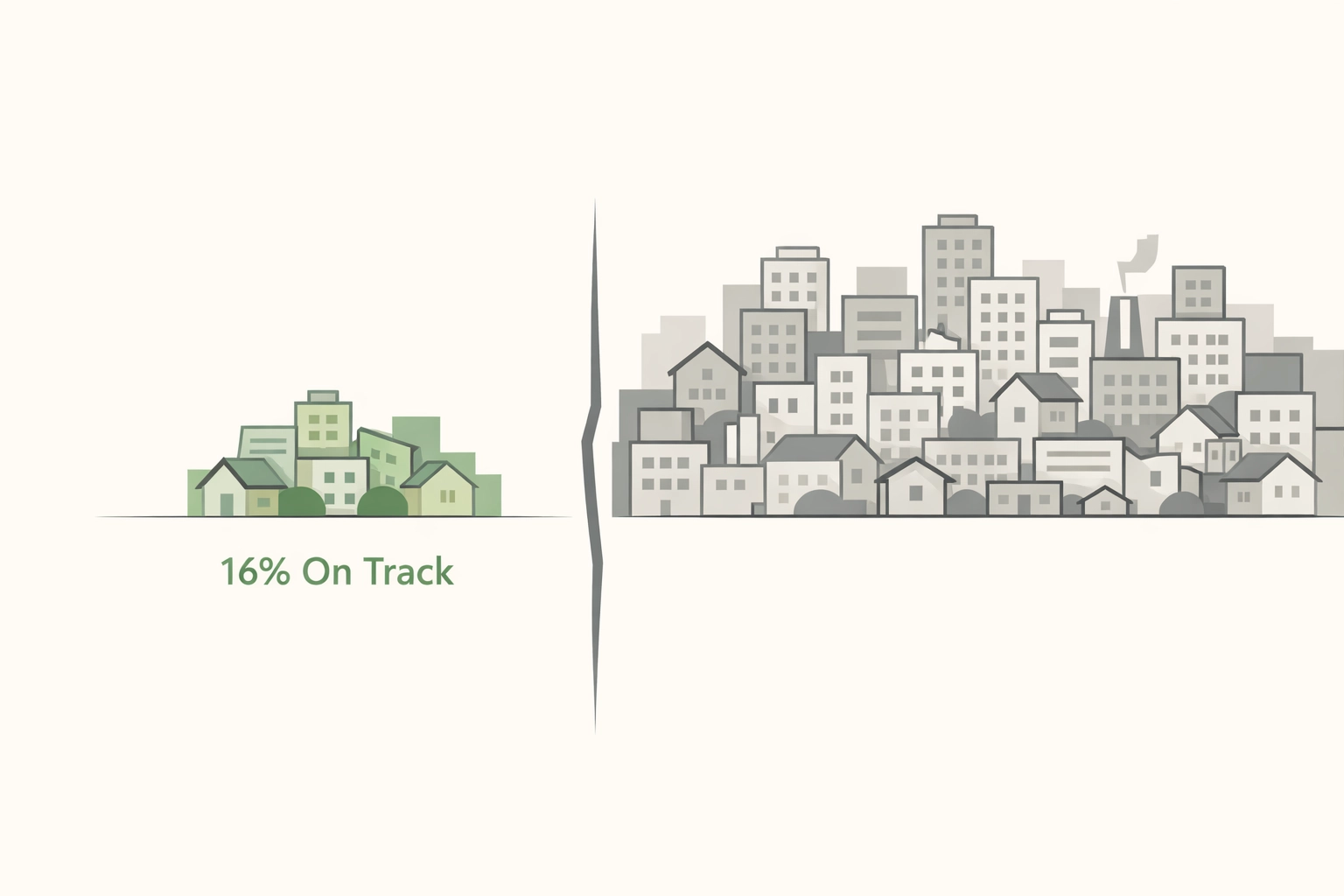
This creates a troubling dynamic: the companies making the most noise about climate commitments are often not the ones that matter most for actually solving the climate crisis. Meanwhile, the companies whose emissions reductions would make the biggest difference are largely sitting on the sidelines.
That said, there's some broader progress worth noting. About 75% of companies have reduced their emissions intensity (emissions per unit of revenue), and over half have cut absolute Scope 1 and 2 emissions since 2016. Perhaps most impressively, revenue across the world's largest companies grew 7% annually since 2016 while operational emissions remained essentially flat. This decoupling of economic growth from emissions growth represents real progress, even if it's not happening fast enough.
What Separates Winners from Losers
So why are some companies succeeding while others are failing spectacularly? The data reveals four key factors that separate companies making real progress from those just making noise:
Externally-validated science-based targets. Companies with targets approved by initiatives like SBTi show they've done the hard work of setting realistic, Paris-aligned goals rather than picking arbitrary numbers that sound good in press releases.
Clear transition plans. It's not enough to say you'll reach net-zero by 2050. Companies succeeding have detailed roadmaps showing how they'll get there, with interim targets and specific strategies.
Board-level oversight. When climate becomes a board-level priority rather than something delegated to the sustainability department, it gets the resources and attention needed to drive real change.
Climate-tied executive compensation. Companies linking executive pay to climate performance see dramatically better results. It's simple: people prioritize what they're measured and rewarded on.
Companies using all four of these approaches reduce emissions by an average of 2.6% annually. That might not sound impressive until you compare it to companies using none of these methods, which see emissions increase by 3% annually on average. That's nearly a 6-percentage-point swing in outcomes.
What This Means for You
If you're an investor, the message is clear: don't just look at whether companies have net-zero targets. Dig into whether they have the four elements that predict actual success. Companies with ambitious targets but weak implementation are setting themselves up for reputational damage, regulatory penalties, and stranded assets. Companies with realistic targets and strong implementation are positioning themselves for long-term value creation in a carbon-constrained world.
If you're working in sustainability at a company, you now have data to make the case for moving beyond aspirational commitments to serious implementation. The gap between leaders and laggards is widening, and companies that don't move quickly risk falling behind competitively.
If you're a consumer or concerned citizen, understand that corporate climate commitments exist on a spectrum from greenwashing to genuine transformation. The fact that 41% of major companies now have value-chain net-zero targets is encouraging, but the fact that only 16% are on track to meet them suggests we need much stronger accountability mechanisms.
The surge in corporate climate commitments in 2025-2026 represents either the beginning of a real transformation in how business operates or an elaborate exercise in reputation management. Which one it becomes depends on whether companies follow through on their pledges with the kind of rigorous implementation that only a minority have demonstrated so far.
The next two to three years will be telling. Companies that set targets in 2025-2026 will soon face their first interim milestones. We'll see who's been doing the hard work of transformation and who's been hoping nobody would check their math.
Category: Companies
