
The Smart Money Is Going Hybrid
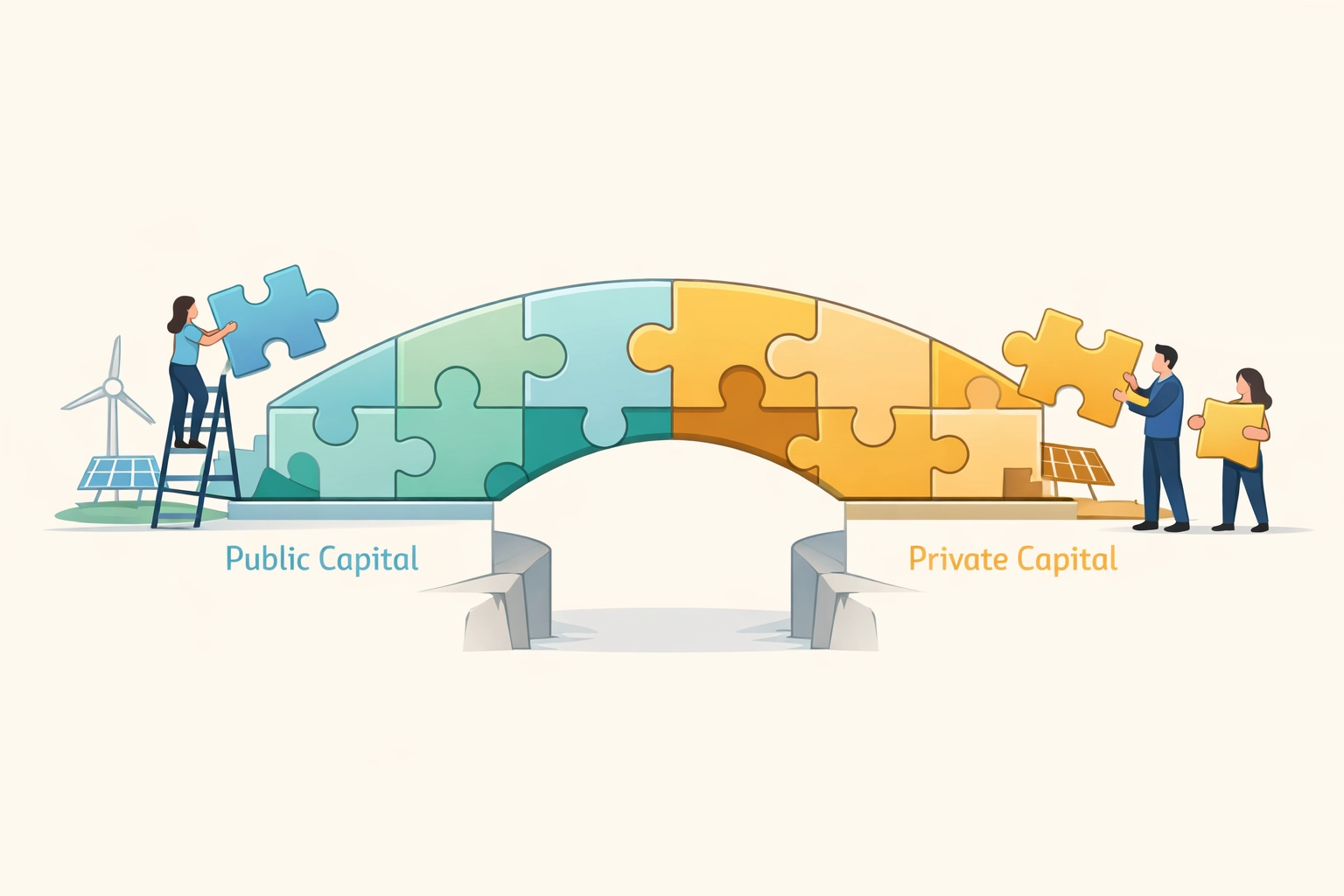
Blended climate finance is having a moment in 2026, and for good reason: it's basically the financial world's answer to getting private investors off the sidelines and into climate projects they'd normally avoid. The concept is simple but powerful: mix public or philanthropic money with private capital, structure the deal so the public funds absorb the riskier parts, and suddenly those climate projects in emerging markets start looking a lot more attractive to pension funds and institutional investors. Development finance institutions take the junior positions (meaning they get paid last if things go south), while private investors get senior positions with predictable, risk-adjusted returns. It's not about offering sky-high returns; it's about making expected returns more certain, which is exactly what risk-averse investors want.
Why This Matters for Your Portfolio
Here's the reality: the climate transition in developing economies needs trillions in capital that governments simply don't have lying around. But private investors haven't exactly been rushing in because perceived risks are high and returns are uncertain. Blended finance changes the math by de-risking the downside without sacrificing commercial viability. You get access to markets and projects that were previously too risky to touch: think climate-smart agriculture in Southeast Asia or resilient infrastructure in Africa: while still earning returns that make sense for your fund. Plus, concessional funders often bring technical assistance and project management to the table, which means you're not flying blind on implementation.
The Opportunity Is Real (And Growing)
Major players like multilateral development banks and the World Economic Forum are championing this approach because it solves two problems at once: it fills the massive climate financing gap while creating pathways for early-stage climate tech to eventually become fully commercial. We're seeing blended structures work across sectors: renewable energy, adaptation projects, monitoring technology: where investors can hit dual objectives of commercial returns and genuine climate impact. The approach unlocks private capital that would otherwise sit idle, especially in regions where investment opportunities exist but traditional risk assessments have kept money on the sidelines. If you're in climate finance and not paying attention to blended structures in 2026, you're missing where the momentum is headed. The World Economic Forum breaks down how blended finance is reshaping climate investment and why it's become essential infrastructure for the energy transition.
Bottom Line for Investors
Blended climate finance isn't charity with a financial veneer: it's a legitimate strategy for accessing commercially viable opportunities that traditional structures couldn't unlock. The risk-return profile gets optimized through strategic capital stacking, you gain exposure to high-growth climate markets, and you're backed by institutions that bring expertise and oversight to complex projects. Whether you're looking at adaptation financing, mitigation tech, or infrastructure resilience, blended approaches are opening doors that were previously closed. If your fund is serious about climate investment in 2026, understanding how blended structures work isn't optional anymore.
